

Ten people have asked me a version of this, and they deserve better than the answer the industry gives them.
Is it per day or per week. What counts as a big jump, because 5,000 to 20,000 is obviously a lot, but what about 5,000 to 7,000. Is it bad to send almost nothing for two weeks and everything in the second half of the month. Does sending too little mean to one person or from the domain. What is the optimal number of emails a week. Our industry has an off-season, do we pause. We switched platform and stopped for a while, how do we restart.
Everybody in email says be consistent. Almost nobody defines it, which is how you end up with ten people asking the same question in ten different ways.
The truthful answer is that it depends, and the useful part is what it depends on. So let us do that.
What consistency means in practice
Providers are not comparing you to a benchmark. They are comparing you to you.
There is no table at Gmail of correct sending volumes by industry. What exists is a model of your normal behaviour, built from your history, and an interest in anything that departs from it. Consistency means your sending is predictable relative to your own past, not that it is identical week to week.
Which reframes every question above. The right volume is not a number somebody can give you, it is whatever you can sustain. A sender doing 5,000 a week forever is more consistent than one averaging 20,000 in unpredictable bursts, and the first one will out-deliver the second.
So the question is never what volume should I send. It is what volume can I commit to, and how do I manage the weeks when my audience or my content does not cooperate.
Per day or per week?
Asked directly, and the answer is both, measured differently.
-
Per day matters for infrastructure. Providers throttle and rate-limit on what arrives in a given period, so a month of volume arriving on one afternoon is a different event from the same volume spread across four weeks.
-
Per week and per month matter for reputation. Patterns are assessed over longer windows, so a single unusual day inside an otherwise steady month is rarely the thing that hurts you.
Plan your cadence weekly and watch your peaks daily.
How big a jump is too big?
The 5,000 to 20,000 versus 5,000 to 7,000 question, and the best question in the set because it spotted that the answer has to be proportional.
Think in multiples, not in absolutes. Roughly doubling your usual volume is the region where providers start paying attention. 5,000 to 7,000 is a 40 per cent increase and generally unremarkable. 5,000 to 20,000 is four times your normal and will be noticed.
What changes where that line sits:
-
Your existing reputation. An established sender in good standing gets more latitude than a new one. The same jump is riskier when you have less credit.
-
Who the extra volume goes to. Twenty thousand to your most engaged segment is a different proposition from twenty thousand including people who have not opened in a year. The number is identical, the signal is not.
-
How often you do it. An annual peak your providers have seen for four years running is part of your pattern. An unprecedented one is not.
-
The provider. They do not all respond the same way, and you will usually see it at one before the others.
Which is why the only useful guidance is a range rather than a rule. Under about 50 per cent growth, send it. Around double, stage it over a few sends. More than double, build up across weeks.
What does sending too little mean?
Somebody asked whether too little refers to an individual recipient or to the domain overall. Both, and they are separate problems with separate fixes.
Too little from the domain
A domain that sends rarely never establishes a pattern, so every send looks like a new event and gets assessed with suspicion. Low-volume senders often struggle more than high-volume ones for precisely this reason, which feels unfair and is simply how the model works.
Monthly sending is hard mode. Fortnightly is better. Weekly is where it gets comfortable, if you have something worth saying.
Too little to an individual
A contact who has not heard from you in a year has effectively forgotten you. When you reappear, the chance of a complaint or a spam-button press is far higher than for somebody you contacted last week, because you now look like a stranger with their email address.
Which is why re-engaging a dormant list is a risk exercise rather than a volume exercise, and there is a separate blog on how to do it without damage.
Exclusions are how you stay consistent
The most useful idea in this blog, and the one almost nobody applies.
When engagement drops, when the content is thin, or when your audience goes quiet for a season, the instinct is to pause. Pausing breaks your pattern, which is the one thing you were trying to protect.
Hold the cadence and shrink the audience instead.
Keep sending weekly, and exclude by engagement so the send goes to the people most likely to respond. Your volume drops, your pattern survives, and your engagement rate goes up rather than down, which is the opposite of what pausing achieves.
Exclusions worth building and keeping maintained:
-
Engagement tiers, so you can tighten or widen the audience without rebuilding a segment each time.
-
Recency windows, opened or clicked in 30, 90, 180 and 365 days.
-
Hard suppression, bounces, complaints, unsubscribes, and anything inherited of unknown origin.
-
Opt-in source, because one acquisition route is usually responsible for most of your trouble and you want to be able to isolate it instantly.
-
Frequency caps per contact, so a busy campaign month does not land on one person six times.
Built once, those let you flex volume by a factor of five without ever changing your cadence. Which is the whole trick.
The off-season problem
Somebody sending to schools asked whether to keep going through the holidays when opens collapse, or pause until term resumes.
Neither, quite. Keep sending, to a much smaller audience, with content suited to the period. You maintain the pattern, you avoid generating a mass of unopened mail, and you come back in September with your reputation where you left it rather than restarting cold.
Mass non-engagement is worse than low volume. Pausing avoids the first and causes the second. Excluding avoids both.
The sporadic B2B list problem
Another version of the same thing, from somebody who has to send to large lists including unengaged contacts because of the nature of their content, with sporadic timing and varying list sizes.
Where it is unavoidable, make the unavoidable part the exception rather than the baseline. Maintain a steady core programme to your engaged audience, so there is always a pattern, and treat the big unengaged sends as the deviations they are. Spread them, stage them, and never let two land in the same week.
Volume peaks and how to ramp into them
Black Friday, a product launch, a conference, a seasonal campaign. A planned peak is the easiest kind of volume change to manage, because you know it is coming.
-
Start three to four weeks out. Begin widening your audience gradually so the peak volume is not the first time that number has arrived.
-
Grow the engaged portion first. Early sends in the ramp should go to your best audience, so the increasing volume arrives with strong signals attached.
-
Add the less engaged segments last and smallest. By which point your recent history already shows higher volume being well received.
-
Stage the peak itself. Splitting one enormous send across a few hours or a couple of days is almost always better than one wall of mail.
-
Watch deferrals, not placement, on the day. Soft bounces and throttling responses are your early warning, and they appear before anything else tells you.
-
Come down gently afterwards. Dropping from peak volume to nothing is as much of a pattern break as the ramp up was. Taper.
The post-peak drop is the part everybody forgets, and it is the reason January so often feels worse than December.
Warming, explained
Warming means building a sending history gradually so providers can form a judgement about you from evidence rather than from nothing.
It applies to a new domain, a new subdomain, a new dedicated IP, a new platform and a return after a long gap. It does not apply to an established sender continuing as normal.
How to do it
-
Start with your most engaged contacts, in small volumes. The people most likely to open, click and reply. You are trying to generate positive evidence, so send to the people most likely to provide it.
-
Increase gradually, roughly doubling at each step, with a few sends at each level before moving up.
-
Widen the audience as you go, adding less engaged segments only once the volume at the previous level has settled.
-
Split by provider if you can. Gmail, Microsoft and Yahoo form judgements independently, and you will often see one lag.
-
Expect two to four weeks for a domain, longer for a dedicated IP, and longer again if your audience engagement is weak, because warming is powered by engagement rather than by time.
That last point is the one worth internalising. Warming is not a waiting period. It is an evidence-gathering period, and sending to a disengaged audience slowly builds a slow, careful case for distrusting you.
Warming on bots, seed accounts or warm-up services
Somebody asked about warming a domain on bots before sending to a real audience, and somebody else asked about the paid services that generate opens and replies on your behalf. Worth being direct about this.
It does not work, and it carries real risk.
Those services generate engagement from accounts that are not customers, which is synthetic engagement, and detecting synthetic engagement is something providers have become markedly better at. Validity published a blocklist aimed specifically at it. Being identified as a sender who manufactures engagement is a worse position than being a sender with low engagement, because the first is deliberate.
Warm on real people who want your email. If you do not have enough of them, that is the problem to solve, and no tool substitutes for it.
Does a weekly newsletter need warming?
Asked in October, about a large volume going out once a week. If the newsletter is established and the volume is normal for you, no. If you are launching it, changing platform, or the volume is a significant step up from your history, yes, and the same ramp applies.
Weekly is a good cadence and a weekly sender has an easier time than a monthly one, so the warming effort pays back quickly.
Restarting after a gap
Several questions here. A platform migration followed by a pause. A business that stopped all sending for two weeks after a low health score and wanted to know how to start again. Somebody blocked from importing contacts after a high unsubscribe rate on their first few sends.
Treat a return after a gap as a warm-up, not a resumption.
-
Do not send to everyone to find out who is still there. The most common and most expensive mistake. You will generate bounces, complaints and spam-button presses in one afternoon, which is exactly the evidence you cannot afford.
-
Start with contacts engaged in the last 30 days, at low volume.
-
Validate the list before you widen it, because the longer the gap, the more of the data has decayed.
-
Widen in stages by recency, 30 days, then 90, then 180, and stop there until you have read the results.
-
Leave anything older than a year alone until you have a reputation again and a proper re-engagement plan.
On the pausing question specifically, pausing everything after a bad score feels responsible and is usually the wrong move, because it removes the positive signals along with the negative ones. Sending less, to better contacts, beats sending nothing.
The dedicated IP volume minimum
Somebody on Marketo was told they had to maintain 100,000 emails a month to keep their dedicated IP, and wanted to know whether that was a deliverability principle or a vendor rule.
It is both, and the principle is the reason for the rule.
A dedicated IP only helps if it sends enough for providers to form a view of it. Below a certain volume there is not enough evidence, the reputation never establishes, and you end up with a cold, unknown IP instead of a seat on a warm shared one with other reputable senders. Platforms set minimums because they would rather not support an arrangement that makes your delivery worse.
Figures in the industry sit broadly between 50,000 and 100,000 a month as the point where a dedicated IP starts to make sense. Below that, shared is usually the better choice, and wanting a dedicated IP for the sake of control is not a deliverability reason.
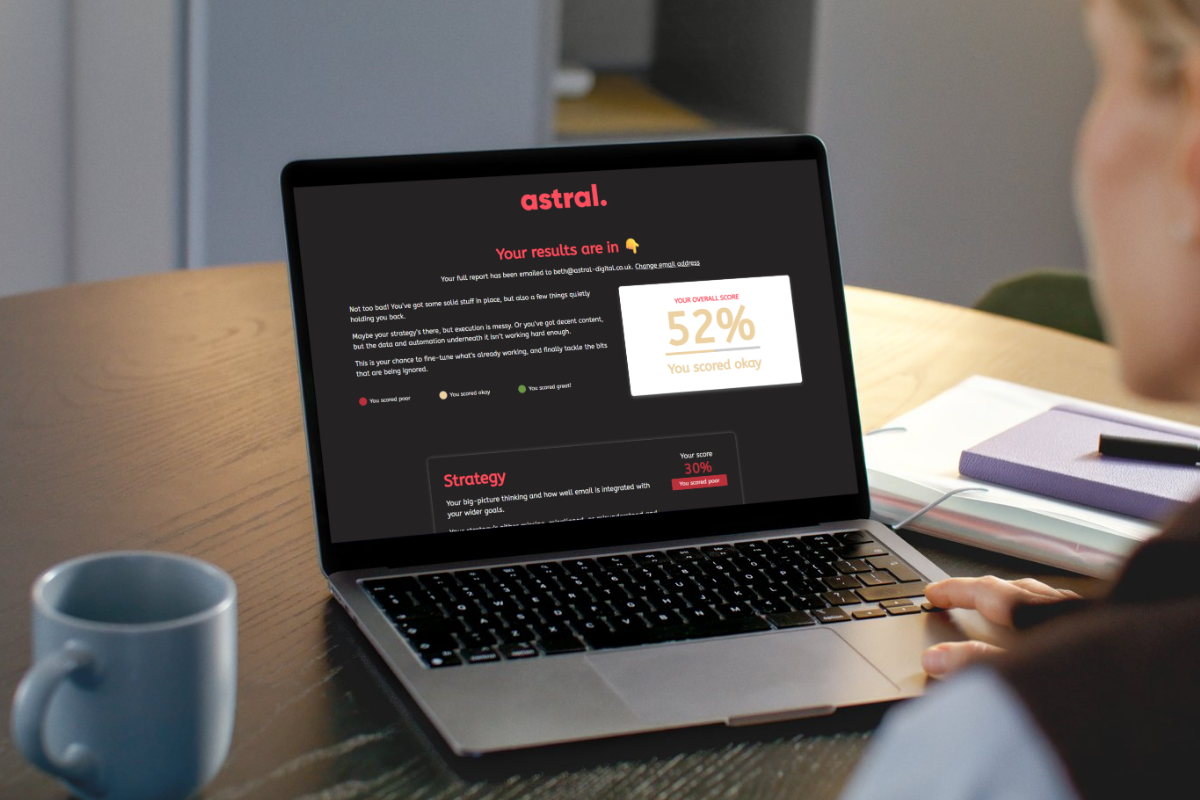
Free Email Marketing Health Check
Audit your entire ecosystem in under 30 minutes
Answer a set of straightforward questions across every area of email marketing and get a personalised score, traffic-light priorities, and clear actions and improvements you can make today.
Guiding principles
-
Providers compare you to you, not to a benchmark. Your history is the standard.
-
Commit to a cadence you can sustain rather than a volume you can occasionally reach.
-
Think in multiples when you change volume, not in absolute numbers.
-
Flex the audience, hold the cadence. Exclusions do the work that pausing cannot.
-
Ramp into planned peaks and taper out of them.
-
Warming runs on engagement, not on time.
-
Never manufacture engagement. The downside is worse than the problem it claims to solve.
-
Treat any return after a gap as a cold start.
Further reading from The Vault:
- Re-engagement: the risk framework for waking up a dormant list
- How to measure email deliverability: every metric and where to find it
- Does your subdomain have its own sender reputation?
- Why you want more unsubscribes, not fewer
- SPF, DKIM and DMARC explained: the plain English guide to email authentication
- How to get leadership to take email deliverability seriously