

Every person on your list already has an association with you. You did not choose it, nobody sat in...
You don't have a content problem, you will only really have a listening problem. How to build an engine that never runs dry, using the data you already have, the questions you're already being asked, and an exercise you can set up this afternoon.
You know the meeting: three or four people in a room, or on a call with cameras off, and somebody says: what shall we send this month? Somebody suggests a case study, somebody else points out you did a case study in March. Someone mentions the newsletter is due Thursday and goes quiet. Eventually a plan gets made that nobody in the room is excited about, and everyone leaves slightly flatter than they arrived.
That meeting is the problem, and it isn't the fault of anybody sitting in it.
Because what you're doing in that room is asking a small number of people to invent demand out of nothing, on a schedule, forever. Of course it dries up. It was never going to do anything else.
Content ideas are not invented; they are collected (in my world anyway!). If you're running out of things to say, it almost certainly isn't because you've said everything worth saying. It's because you have no system for collecting what your audience is already telling you, every week, through half a dozen channels you're not reading as content. So every month starts from zero, and every month feels harder than the last.
Build a question bank, not an idea list
Every email worth sending answers a question somebody genuinely has. Not a topic, a question. “Our Q3 product update” is a topic. “Why has the thing you rely on changed, and what do you need to do about it?” is a question, and it's the same email written from the reader's side of the inbox.
Once you see it that way, something useful happens. Every source of content ideas you have — your data, your replies, your sales calls, your research, your TFDS map — produces exactly the same output when you look at it properly. It produces a question.
Which matters for three reasons.
-
Questions are collectable. You cannot harvest “a good idea”. You absolutely can harvest “the thing three different people asked us this week”, and you can do it in fifteen minutes.
-
Questions come with a format attached. Question in the subject line, answer in the body. There's a whole section on this further down because it works better than it has any right to.
-
Answering a question is a give by definition. You're spending your expertise on somebody else's problem and asking for nothing back. Which means a full question bank fixes your give/ask ratio without you having to manage it.
That last point is the one I'd underline. Most emails ask too much because they've got nothing else to say, not because the team is greedy. Fill the pipeline with real questions and the ask stops being the only thing you have to offer.
The sources
Where the questions actually come from
There are more of these than you'd expect, and you don't need all of them. You need three or four running consistently, which will always beat twelve running badly and then quietly being abandoned in April.
1. What they already told you
This is the richest source and the most ignored, because it doesn't feel like research. It feels like admin, and it sits in a system nobody opens on purpose.
-
The “why now?” answers. If you ask people why they signed up (this is called motivational data), and you should, those answers are your content plan written by your audience. “Pressure from leadership to fix our reporting” and “just learning the basics” are two completely different editorial calendars and you already have both.
-
Topic picks and preference selections. People clicking to say what they want more of. It is difficult to overstate how strange it is that this data exists and nobody plans against it.
-
Topic telemetry. Tag every link with a topic code, roll engagement up by segment, and you have a ranked list of what your audience cares/wants to hear about rather than what you assumed in a workshop.
-
Progressive profiling answers. Everything you've collected slowly over time and never once used to change what you send.
If you have ever added a field to a form and not changed a single email as a result, you have a content source sitting there unopened.
2. What they asked you directly
Replies, calls and tickets. These are the highest-quality questions you will ever get, because somebody cared enough to type them out or say them to your face.
-
Reply mining. Every reply is a content brief written by the exact person you're trying to write for. Label them, summarise monthly, route them to whoever writes.
-
Sales calls, and not just the objections. The questions asked in the first ten minutes are the gold, because they tell you what people don't understand before they're even able to evaluate you properly.
-
Support and service tickets. The least-read content source in most businesses. Somebody is carefully documenting your audience's confusion all day and filing it under “resolved”.
-
Post-purchase questions specifically. This is confusion you are causing. Every one of them is onboarding content, fully formed, free, and overdue.
-
The three-times rule. If you've answered it three times this month in DMs, replies or corridor conversations, it's an email. You've already written it; you've just written it privately and repeatedly.
3. What they ask when you're not in the room
People phrase things differently when they don't think a supplier is listening, and the phrasing is as valuable as the topic.
-
Google. Autocomplete, People Also Ask, related searches. Not for SEO here, for language. This is how humans actually type the problem.
-
Reddit and industry forums. Where people ask the question they'd be slightly embarrassed to ask a vendor. The unguarded version of the same problem.
-
Review sites, yours and your competitors'. G2, Trustpilot, app store reviews. People describing the problem at the precise moment they were most annoyed by it, which tends to produce very clear writing.
-
Your own site search and your 404s. Unfiltered demand with no interpretation layer between you and it. People telling you what they came for and couldn't find.
-
Comments on your own content, and on LinkedIn. Including the disagreements, which are often better prompts than the compliments.
Take the phrasing down verbatim and resist the urge to tidy it. “Why do my emails go to promotions” and “Gmail tab placement optimisation” are the same topic, but only one of them is a thing a person has ever said out loud.
4. What they're thinking but haven't said (TFDS)
Everything above harvests things people have already articulated. TFDS is the only source on this list that gets at what's underneath — the questions people haven't put into words yet, and often can't.
I've written the full method elsewhere so I won't repeat it here, but the mechanism for our purposes is simple: run Think, Feel, Do and Say across before, during and after a specific entry point, then convert every Think and every Say into a question. They convert almost mechanically.
|
What the TFDS map surfaced |
The question hiding inside it |
|
“Am I going to get spammed now?” |
What actually happens after you download something from us? |
|
“Is this actually worth it?” |
Is this worth the money? Here's the honest answer. |
|
“I need to prove something internally.” |
How do you get budget signed off for this? |
|
“Our templates break in Outlook and nobody owns it.” |
Who should actually own email in your business? |
Look at the third row please, because it's the pattern most people miss. A great deal of B2B content should be written for your reader to forward to somebody else. They are frequently not the decision maker, they're the internal advocate, and what they need from you is ammunition rather than persuasion.
5. What they should be asking and aren't
This is the column that stops the whole system from leaving you merely useful.
If you only ever answer harvested questions, you become reactive. Helpful, dependable, well-reviewed, and never once telling anybody something they didn't already know to wonder about. That's a perfectly decent newsletter and a completely forgettable one.
So the bank needs a second column: the things you know from doing this work that your audience doesn't yet know to ask. The consequences they haven't connected. The thing everyone in your industry repeats that you've stopped believing. The question they'll wish they'd asked six months from now.
“Have strong opinions” is not an instruction anybody can act on, so here are the prompts that actually generate this column:
-
What do you find in nearly every project that the client never flagged as a problem?
-
What piece of standard industry advice have you quietly stopped believing, and why?
-
What do people consistently get wrong when they try to do this themselves?
-
What would you say if you weren't slightly worried about how it would land?
-
What do you know now that you'd go back and tell yourself five years ago?
This is where contrarian content comes from, and it's the difference between answering your audience and leading them.
6. Timing sources: the questions that are only urgent now
-
Their calendar, not yours. Most content plans are built around the brand's commercial year. Build around the customer's instead — when do they plan, budget, report, get audited, hire, hit peak, panic. In B2C it's seasonal need moments and life events. It's a full year of relevance that almost nobody is competing for.
-
Whatever just changed in your industry. Your take on the thing that happened this month, particularly if the industry consensus formed within about four hours of it happening.
-
What you changed your mind about. The reversal is the single hardest piece of content to manufacture and the easiest to trust, because nobody writes a fake one.
Not every question deserves an email
Without a filter, a question bank becomes a treadmill where you diligently answer trivia at a high cadence and call it a content strategy. Which is how you end up sending more email to people who wanted less of it.
The test I'd use is...does answering this change what they think, feel or do?
|
If answering it… |
Then it belongs… |
|
Changes nothing, it's just a fact they needed |
In your help centre or FAQ, not in anybody's inbox |
|
Changes one person's mind |
In a reply to that person, written properly, by a human |
|
Changes what a segment thinks or does |
In an email to that segment |
|
Changes what your whole audience believes |
In a blog, a newsletter lead, or a masterclass — it's bigger than one send |
There's a second filter worth applying, and it's less comfortable: is this my question to answer, or am I answering it because it's the easiest one in the bank? Easy questions are seductive precisely because they're finishable, and a month of finishable content is how programmes become background noise.
The format
Question as the subject line, answer as the email
This is where the engine pays off in the inbox, and it works for a specific psychological reason rather than because it's a clever hack.
If you don't believe me check out my clients results on just using this format & strategy for email:
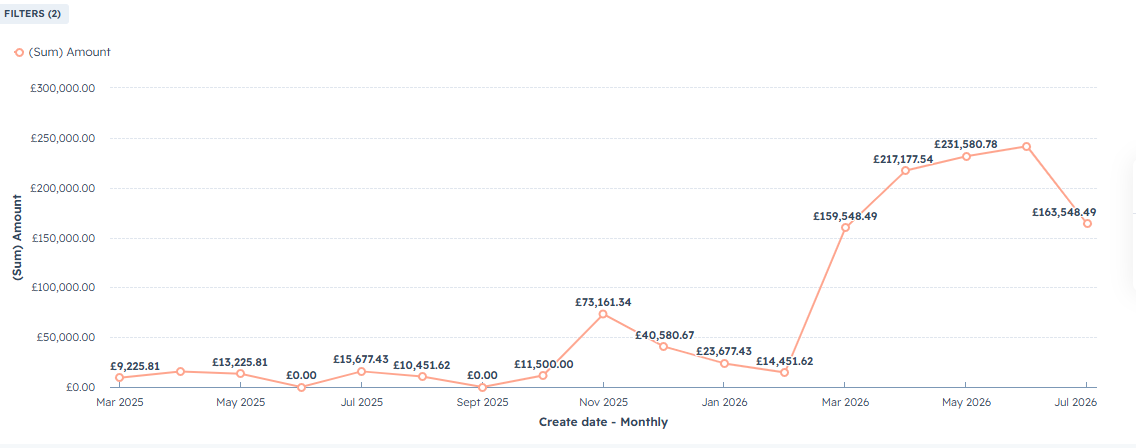
Why it works
-
A question is a completed thought that opens a loop. Most subject lines are a topic, and topics create no tension whatsoever. A question your reader recognises as their own creates a small, specific itch.
-
It answers the triage question instantly. Every reader is subconsciously asking “is this for me or is this for them?” A question they've genuinely had settles that before they've finished reading the sender name.
-
It's recognition rather than persuasion. People don't analyse their inbox, they pattern-match it in milliseconds. “That's the thing I was wondering about” is a far faster route to an open than any amount of cleverness.
-
It sets a contract, and contracts compound. Question in the subject, answer in the body. Honour that consistently and you train people that your emails resolve things, which is the single best association a sender can have.
The rules
-
Use their words and language. Harvested phrasing beats marketing phrasing every time, and it's the whole reason you wrote the questions down verbatim.
-
Answer it in the first two lines. Do not make somebody scroll for the thing you promised in the subject line. This is the fastest way to break the contract you just made.
-
One question per email. If you've got two, you've got two emails, and you should be delighted about that.
-
Never ask a question you don't then answer. A question in the subject that the email doesn't resolve is a bait-and-switch, and people fall for that exactly once.
-
Don't do it every single time. If every subject line is a question it becomes a pattern, and patterns get filtered like every other pattern. Predictability without variety trains people to stop looking.
|
Where it came from |
The subject line |
The job of the email |
|
A search query |
Why do your emails keep landing in Promotions? |
Explain how classification actually works, including when it genuinely does not matter |
|
A question on a sales call |
How long does this actually take? |
Set real expectations, filter out poor-fit buyers, build trust by not overselling the timeline |
|
A cancellation reason |
What if you don't have time to implement any of this? |
Address the real blocker rather than the stated one, and offer the smaller version |
|
A reply from a subscriber |
Is it too late to fix a list this messy? |
Reassure, give the first genuine step, and make replying easy |
The exercise
Build the bank
Two parts, and they're deliberately separate, because the reason content dries up is that people treat idea generation as an event rather than a system. Events finish. Systems accumulate.
Part one: the capture layer
Always on, fifteen minutes a week with one person who owns it.
One place. A spreadsheet, a Notion table, a list in your CRM, a shared doc. It does not matter which, as long as it is one place and everybody can add to it without asking permission.
Seven columns:
|
Column |
What goes in it |
Why it's there |
|
The question |
Verbatim, in their words. Do not tidy it up. |
The phrasing is the asset, not just the topic |
|
Source |
Reply, call, ticket, search, review, TFDS, your own head |
So you can see which channels actually produce and which you can stop checking |
|
Who asked |
Prospect, customer, churned, segment name |
The same question from a prospect and a customer is two different emails |
|
Stage |
Before, during or after the thing they were doing |
Tells you where in the journey the answer belongs |
|
Give or ask |
Does answering this serve them, or you? |
Lets you check your ratio at planning stage rather than after the fact |
|
Frequency |
A tally. Add one every time it comes up again. |
This is your prioritisation, and it removes the argument entirely |
|
Status |
Unused, drafted, sent, and the date |
Stops you answering the same question twice in six weeks |
The frequency column is the one that changes how planning meetings feel. You no longer need to debate what to write about when you can see, in front of you, that nine separate people asked the same thing this quarter. Recurrence is a much better editor than opinion is.
What the fifteen minutes actually looks like
-
Scan the week’s replies and pull any question out.
-
Scan support tickets or ask whoever handles them for the top three.
-
Ask sales for one question they were asked this week. One. Make it easy or it will not happen.
-
Add anything from your own reading, your own inbox, or your own irritation.
Capture only. Do not evaluate, do not decide, do not start writing. Evaluation is a different job on a different day, and mixing the two is the specific reason people abandon systems like this in week three.
Part two: the multiplication session
Quarterly. Ninety minutes. One segment at a time.
-
Pick one segment. Not “the list”. One segment, defined by how they entered, because entry point determines everything about what they need.
-
Run TFDS across before, during and after for that segment. Brainstorm liberally and messily. The job is not to be right, it is to get close enough to design relevance.
-
Convert every Think and every Say into a question. Literally rewrite them. Most convert in one move.
-
Pull everything from your capture bank that matches that segment. Merge it in. You will find overlaps, and overlaps are confirmation rather than duplication.
-
Add the second column. Five things they should be asking and aren’t. Use the prompts from earlier if you get stuck.
-
Cluster into six themes. Orientation, value, objections, proof, decision support, friction removal. Same clusters that structure a journey, which is not a coincidence.
-
Classify each one as a give or an ask. Then look at the balance honestly before you plan anything.
-
Multiply. Which is the next section, and the part that changes the maths.
The multiplier: one question, five emails
This is what turns “enough content” into “more content than we can use”. Every question in your bank can be answered several different ways, and each one is a genuinely different email rather than a rewrite of the last.
|
The angle |
What it does |
Give or ask |
|
The straight answer |
Answer the question plainly, completely, without hedging or upselling |
Give |
|
The story |
A time you or a client got this wrong, and what it cost |
Give, and the one that builds trust fastest |
|
The proof |
The evidence, the numbers, the worked example |
Give, leaning commercial |
|
The contrarian take |
Why the standard answer to this question is wrong, and what to do instead |
Give, and the one that differentiates you |
|
The quick win |
The smallest useful thing they can do about it today |
Give, and the best generator of replies |
|
The decision support |
For people showing intent: what they need in order to choose |
This is where an ask legitimately belongs |
Do the arithmetic and be honest about what it means. One segment, one TFDS session, twenty harvested questions, five or six angles each. That isn't a month of content. That's more than a year of it, and you will never use all of it, which is exactly the point. Running dry is a supply problem, and you have just built supply.
What this looks like six months in
-
You have not once sat in a meeting asking what you should send.
-
Your content plan is a ranked list, ranked by how often real people actually asked.
-
You know which sources produce and which ones you can stop checking.
-
Your gives outnumber your asks without anybody having to police it.
-
Your reply rate is up, which feeds the bank, which is the loop closing on itself.
Last thing...
This does not work if nobody owns it. Fifteen minutes a week is almost nothing, but it is fifteen minutes a week forever, and systems that belong to everybody get done by nobody. Name a person. If you can't name a person, you don't have a system, you have a spreadsheet with good intentions attached.
And the bank tells you what to say. It does not tell you whether to send it. Volume, cadence, exclusions and who should be left alone this week are entirely separate decisions, and a full pipeline is not a reason to email more often. It's a reason to email better, which is a different thing and a harder one.
What to read next in the Vault
-
What Is a Data Collection Strategy, and Why Is It the Backbone of Great Email Marketing?
-
Intent Over Personalisation: What “Personal” Actually Means in Email
-
Email Volume: How Much Is Too Much, How Little Is Too Little